
Blake Swing Jaw Crusher
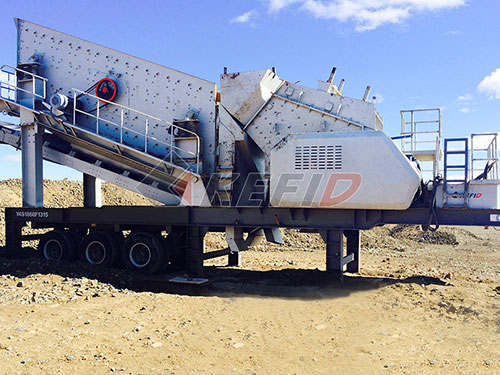

Die onwrikbare werkesel: Demystifying the Blake Swing Jaw Crusher
The thunderous roar of rock meeting steel resonates through quarries and mines worldwide, a testament to fundamental forces harnessed for progress. At the heart of this raw power transformation often lies a machine whose design principles have endured for over a century and a half – the Blake Swing Jaw Crusher. More than just historical artifact, it remains a cornerstone technology in primary crushing operations globally, prized for its robust simplicity, betroubaarheid, and formidable capability to reduce massive boulders into manageable fragments.
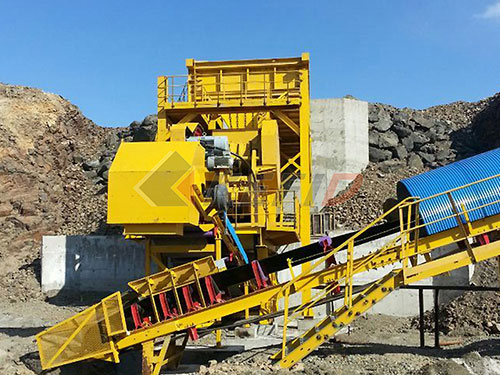
The Genesis of an Icon
Attributed to American inventor Eli Whitney Blake in 1858, the Blake crusher wasn't merely an incremental improvement; it was revolutionary. Prior methods relied heavily on manual labor or inefficient mechanical stamps. Blake's patent introduced the fundamental concept that still defines jaw crushers today: a fixed jaw surface opposing a movable jaw surface, creating a converging cavity where material is progressively crushed by compressive force.
The key innovation lay in the swinging motion of the movable jaw (the swing jaw), pivoted at its top edge near the feed opening and actuated by linkages connected near its bottom edge. This configuration created an elliptical motion path at the discharge end – crucial for effectively nipping and crushing large feed material while simultaneously providing sufficient opening at the bottom for crushed product to escape.
Anatomie van krag: Kernkomponente
Understanding the Blake crusher requires dissecting its robust anatomy:
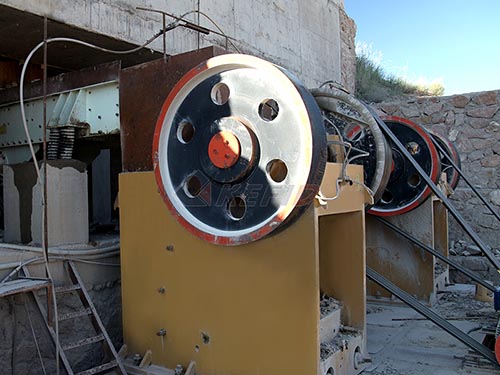
1. Raam: The massive structural backbone, typically cast steel or heavy welded plate construction, designed to withstand immense crushing forces and vibrations.
2. Vaste kakebeen: Rigidly mounted onto the frame opposite the swing jaw assembly. Its inner surface forms one side of the crushing chamber.
3. Swaai kakebeen: The dynamic counterpart to the fixed jaw.
Pivot Point: Located high up near the top/rear of the swing jaw assembly.
Kaakplate: Replaceable wear liners bolted onto both jaws' crushing faces (typically made from austenitic manganese steel for exceptional toughness and work-hardening properties).
Wangplate: Protective liners covering the sides of the frame adjacent to the crushing chamber.
4. Eksentrieke skag: The driving heart of motion rotationally mounted within bearings on either side of the frame near its base.
5. Pitman Arm: A robust connecting link driven directly by eccentric throws on each end of the