
500 Tph Gold Mining Washing Plant Oem Factory Specification
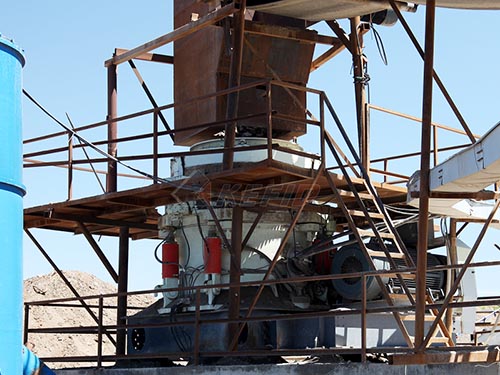

1. PAINPOINT DRIVEN OPENING
Are you scaling up your alluvial or hard rock gold operation and finding that your washing and recovery processes are the bottleneck? Managing a 500 TPH throughput presents distinct challenges that directly impact your bottom line. Common operational hurdles include:
Inconsistent Recovery Rates: Standard scrubbers and sluices can struggle with variable clay content or particle size distribution, leading to fine gold losses that accumulate to significant revenue leakage over time.
Excessive Downtime for Maintenance: Plants with complex, multistage washing circuits often require frequent stoppages for screen changes, pump servicing, or trommel drum repairs, costing hundreds of production hours annually.
High Water and Power Consumption: Inefficient design leads to unsustainable water recirculation volumes and oversized motor requirements, escalating operational costs in remote mining sites.
Difficulty Handling Feed Variability: A single deposit can yield everything from loose gravel to cemented conglomerates. A plant that isn't robust enough requires constant manual adjustment and risks blockages.
The central question for plant managers is: How do you achieve reliable, highvolume gold recovery while controlling operational expenditure and maximizing plant availability? The specification of your core washing plant is the definitive answer.
2. PRODUCT OVERVIEW
The 500 TPH Gold Mining Washing Plant is a complete, modular processing system designed for the primary scrubbing, classification, and gravity concentration of goldbearing alluvial or eluvial deposits. Engineered for highvolume operations, it transforms raw feedstock into concentrated heavy mineral product for downstream refining.
Operational Workflow:
1. Primary Feed & Scrubbing: Runofmine material is introduced into a heavyduty trommel scrubber, where it is aggressively scoured to break down clays and cemented matrices, liberating gold particles.
2. Particle Size Classification: The scrubbed material is screened; oversize (typically +75mm) waste rock is conveyed away, while the undersize slurry reports to the primary concentration stage.
3. Primary Gravity Concentration: A highcapacity pulsed sluice or centrifugal concentrator system extracts the majority of liberated gold from the screened slurry.
4. Tailings Management & Water Recycling: Depleted tailings are directed to a settling pond or dewatering system, while process water is clarified and recirculated, minimizing fresh water demand.
Application Scope & Limitations:
Scope: Ideal for largescale alluvial/placer mining operations, eluvial deposits, and weathered hard rock saprolite material where gold is liberated through physical attrition.
Limitations: Not suitable for primary processing of unweathered hard rock ores requiring crushing and milling. Efficiency is dependent on adequate water supply (though recirculation minimizes net use). Optimal performance requires feed material sizing within design parameters (e.g., maximum lump size).
3. CORE FEATURES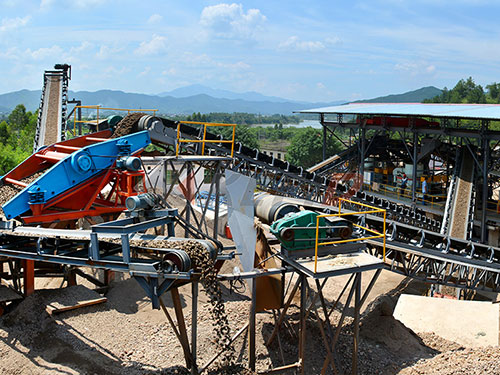
Modular Skid Design | Technical Basis: Preassembled, steelframed modules with integrated piping/wiring | Operational Benefit: Reduces onsite installation time by up to 60%, minimizes civil works cost and commissioning risk | ROI Impact: Faster timetoproduction (weeks vs. months), lower capital installation overhead
HeavyDuty Trommel Scrubber | Technical Basis: Highstress drum with internal lifters and reinforced screen panels | Operational Benefit: Consistent breakdown of tough clays and soft agglomerates without plugging; liner life exceeds 3,000 hours in abrasive feeds | ROI Impact: Sustained design throughput (500 TPH), reduced downtime for screen panel replacement
Intelligent Water Management System | Technical Basis: Closedloop circuit with automated dosing flocculant injection and thickener | Operational Benefit: Cuts fresh water consumption by over 80%; produces clearer water for improved recovery efficiency | ROI Impact: Drastically lowers water licensing costs and pumping energy; viable in waterscarce regions
Cascading Gravity Recovery Circuit | Technical Basis: Primary rougher concentrator followed by secondary scavenger unit with interstage screening | Operational Benefit: Captures a broad range of gold particle sizes (+300 micron to 75 micron); field data shows consistent +95% recovery rates on liberated gold | ROI Impact: Maximizes revenue capture from every ton processed; reduces need for costly tailings reprocessing
Centralized PLC Control & Monitoring | Technical Basis: Industrial programmable logic controller with HMI touchscreen displaying motor loads, feed rates, and pump pressures | Operational Benefit: Enables singleoperator oversight of the entire washing circuit; provides realtime diagnostics for predictive maintenance | ROI Impact: Lowers labor costs per ton; prevents catastrophic equipment failure through early warning alerts
AbrasionResistant Material Specification | Technical Basis: Critical wear zones lined with AR400 steel or polyurethane castings; slurry pumps fitted with highchrome alloys | Operational Benefit: Components withstand continuous abrasive slurry flow with minimal degradation | ROI Impact: Predictable maintenance scheduling extends major component lifecycles by 4050%, lowering spare parts inventory cost.
4. COMPETITIVE ADVANTAGES
| Performance Metric | Industry Standard for 500 TPH Plants | Our 500 TPH Gold Mining Washing Plant Solution | Advantage (% Improvement) |
| : | : | : | : |
| Overall Recovery Efficiency (Liberated Au) | 88% 92% range due to fine gold losses in tails| Consistent >95% via optimized cascading gravity circuit| +4% to +8% increase in recovered metal value |
| Average Water Consumption (m³/ton) | 3.5 4.5 m³/ton (open circuit typical) | 80% reduction in net freshwater use |
| Installation & Commissioning Timeline| 16 24 weeks from delivery| 6 10 weeks due to modular skid design| ~60% faster deployment |
| Annual Availability (Scheduled Runtime) | ~85% (approx. 620 hrs downtime)| >92% via robust design & predictive monitoring| +7% availability (~600 extra hrs/year) |
| Total Power Draw (kW) ~ Installed Load| ~750 kW typical aggregate load| ~650 kW via optimized pump & drive selection| ~13% reduction in direct energy cost |
5. TECHNICAL SPECIFICATIONS
Design Capacity: Nominal throughput of 500 metric tons per hour (TPH) of 150mm feed material at a solids density of ~1.6 t/m³.
Power Requirements: Total connected load approximately 650 kW. Requires primary supply at either:
6kV /50Hz/3 Phase
11kV /60Hz/3 Phase
Can be configured for diesel genset power pack operation.
Material Specifications:
Main Frame & Skids: ASTM A36 Steel
Trommel Drum Shell & Screen Panels / Chute Liners / Launders Wear Areas:
AR400 AbrasionResistant Steel
30mm Natural Rubber Lining
25mm Polyurethane Castings
Slurry Pump Wetted Parts:
HighChrome Alloy Cast Iron (>28% Cr)
Physical Dimensions (Modular):
Primary Scrubber Module:
L x W x H = approx..12m x .5m x .5m
18m x .5m x .5m
18m x .5m x .5m
18m x .5m x .5m
18m x .5m x .5m
18m x .5m x .5m
18xWxH=approx..12mxWxH=approx..12mxWxH=approx..12mxWxH=approx..12mxWxH=approx..12mxWxH=approx..12mxWxH=approx..12mxWxH=approx..12mxWxH=approx..
18xWxH=approx..
18xWxH=approx..
18xWxH=approxx.x.x.x.x.x.x.x.x.x.x.x.x.x.x