
250 300tph Stone Crushing Plant Wholesaler
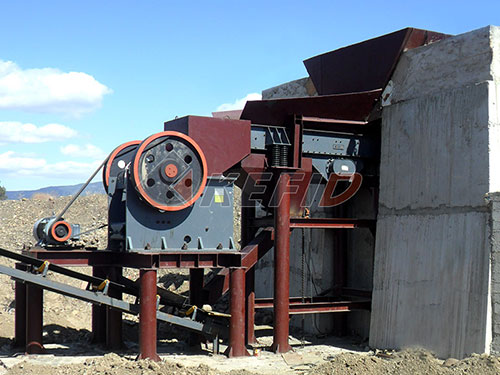

250300 TPH Stone Crushing Plant: HighCapacity Solution for Commercial Aggregate Production
Your Operational Challenges in MediumtoHigh Volume Crushing
If you are managing a quarry or construction material supply operation, you face specific pressures when scaling to 250300 tons per hour. Downtime from equipment mismatch costs an estimated $1,200$2,800 per hour in lost production, depending on your aggregate pricing. Inconsistent product gradation leads to rejected loads and rehandling expenses that can erode 815% of your profit margin. High wear part consumption on undersized crushers forces monthly liner replacements, adding $15,000$40,000 in unplanned maintenance. Power inefficiency from poorly matched motor drives increases your perton energy cost by 1218% compared to optimized systems. Regulatory pressure for dust and noise control adds compliance costs that a properly designed plant can mitigate.
Does your current setup struggle to maintain consistent output during peak demand? Are you losing bids because your production ceiling is too low? A dedicated 250300 TPH stone crushing plant addresses these constraints directly.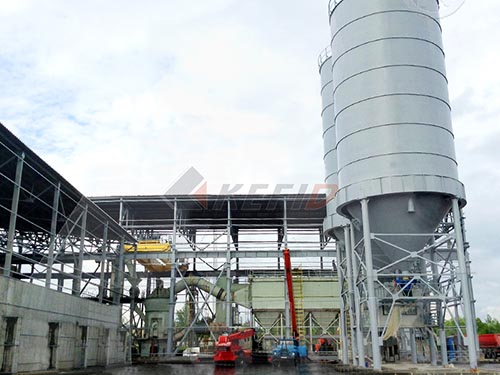
Product Overview: Integrated 250300 TPH Crushing & Screening System
This is a complete stationary or semimobile crushing plant designed for continuous production of 250300 metric tons per hour of crushed stone, from primary reduction to final screening. The system processes feed material up to 650800 mm (2532 inches) and produces multiple graded aggregates (05mm, 510mm, 1020mm, 2040mm) plus crusherrun base material.
Operational Workflow:
1. Primary Crushing: Vibrating grizzly feeder (1200x4500mm) removes fines, then feeds a jaw crusher (PE900x1200 or equivalent) reducing rock to 150200mm.
2. Secondary Crushing: Belt conveyor transfers material to a cone crusher (CS160 or GP series) for reduction to 4080mm.
3. Tertiary Crushing: Closedcircuit configuration with a second cone or impact crusher (PF1315 or VSI9000) for final shaping to 040mm.
4. Screening & Classification: Two or threedeck vibrating screens (3YK2460 or 4YK2470) separate material into 34 product streams.
5. Stockpiling & Loadout: Radial stackers or conveyor systems direct finished products to stockpiles or truck loading bins.
Application Scope: Hard rock (granite, basalt, quartzite), mediumhard stone (limestone, dolomite), and river gravel. Limitations: Not suitable for soft materials (clay, shale) without prewashing; requires minimum 8001000 kVA power supply; needs 3040m x 5060m footprint for stationary configuration.
Core Features
1. Matched Component Sizing
Technical Basis: Each crusher, screen, and conveyor is sized using flow analysis software to eliminate bottlenecks at 250300 TPH throughput.
Operational Benefit: Your operators will experience consistent material flow without crusher chokeups or screen blinding during peak loads.
ROI Impact: Reduces unscheduled downtime by 4060% compared to mismatched component plants, saving $2,500$5,000 per month in lost production.
2. HeavyDuty Jaw Crusher with Hydraulic Adjustment
Technical Basis: PE900x1200 jaw crusher with 900mm x 1200mm feed opening, 160220 TPH capacity at 150200mm CSS, hydraulic wedge adjustment system.
Operational Benefit: CSS changes take 58 minutes versus 3045 minutes with mechanical adjustment, allowing rapid response to feed size variations.
ROI Impact: Reduces labor cost for setting changes by $1,200$2,000 monthly and increases uptime by 35%.
3. MultiCylinder Cone Crusher for Consistent Product Shape
Technical Basis: Hydraulic cone crusher with 360400mm feed opening, 120200 TPH capacity, automatic tramp iron release and clearing system.
Operational Benefit: Your product gradation remains within ±3% of target specification even with varying feed hardness, reducing rejected loads.
ROI Impact: Decreases material rehandling costs by $8,000$15,000 annually and improves customer acceptance rates.
4. HighEfficiency Vibrating Screen with Modular Panels
Technical Basis: 3deck screen (3YK2460) with 2400x6000mm screening area, 1825mm stroke, 800900 RPM, polyurethane modular panels.
Operational Benefit: Screen deck changeover takes 2 hours versus 68 hours for traditional woven wire, and panel life reaches 612 months.
ROI Impact: Reduces screen replacement costs by 3550% and maintenance labor by $3,000$6,000 per year.
5. Centralized PLC Control with Remote Monitoring
Technical Basis: Siemens or AllenBradley PLC with HMI touchscreen, monitoring motor amps, bearing temperatures, belt speeds, and material levels.
Operational Benefit: Your plant manager can adjust feed rates and crusher settings from a single station, reducing operator headcount by 12 persons per shift.
ROI Impact: Saves $35,000$55,000 annually in labor costs and provides realtime data for production reporting.
6. Dust Suppression System with Water Spray Nozzles
Technical Basis: Highpressure water spray system (2040 bar) at crusher discharge points, transfer chutes, and screen decks, with 1525 micron droplet size.
Operational Benefit: Reduces airborne particulate matter (PM10) by 7085%, meeting most regional environmental standards without baghouse filtration.
ROI Impact: Avoids potential fines of $5,000$25,000 per violation and reduces water consumption by 3040% compared to uncontrolled spraying.
7. Modular Frame Design for Rapid Installation
Technical Basis: Preengineered steel structure with bolted connections, prewired electrical panels, and prepiped hydraulic systems.
Operational Benefit: Your installation crew can complete site assembly in 1421 days versus 3045 days for custombuilt plants, reducing project risk.
ROI Impact: Accelerates revenue generation by 24 weeks, representing $120,000$360,000 in earlier production at 250 TPH.
Competitive Advantages
| Performance Metric | Industry Standard (200250 TPH Plant) | 250300 TPH Solution | Advantage (% Improvement) |
|||||
| Actual throughput (TPH) | 180220 TPH (sustained) | 250300 TPH (sustained) | 2536% higher output |
| Product gradation consistency | ±57% variation | ±23% variation | 5060% improvement |
| Power consumption (kWh/ton) | 0.81.2 kWh/ton | 0.60.85 kWh/ton | 2530% lower energy cost |
| Wear part life (jaw liners) | 80120 hours | 120180 hours | 3350% longer life |
| Changeover time (product spec) | 46 hours | 1.53 hours | 5063% faster |
| Dust emissions (mg/Nm³) | 5080 mg/Nm³ | 1530 mg/Nm³ | 6070% reduction |
| Annual maintenance cost | $45,000$65,000 | $30,000$45,000 | 3035% lower |
Technical Specifications
| Parameter | Specification |
|||
| Rated capacity | 250300 TPH (depending on feed material hardness and final product size) |
| Maximum feed size | 650800 mm (2532 inches) |
| Final product sizes | 05mm, 510mm, 1020mm, 2040mm, 040mm crusher run |
| Primary crusher | PE900x1200 jaw crusher, 160220 TPH, 110132 kW motor |
| Secondary crusher | CS160 or GP200 cone crusher, 120200 TPH, 160200 kW motor |
| Tertiary crusher | PF1315 impact crusher or VSI9000, 100180 TPH, 200250 kW motor |
| Screening equipment | 3YK2460 or 4YK2470 vibrating screen, 23 decks |
| Total installed power | 650850 kW (depending on configuration) |
| Power supply requirement | 8001000 kVA, 380V/440V/660V, 50/60 Hz |
| Conveyor system | 812 belt conveyors, 8001200mm width, 1.52.5 m/s speed |
| Dust control | Water spray system, 2040 bar, 1525 micron nozzles |
| Control system | PLC with HMI, remote monitoring via Ethernet |
| Operating temperature range | 10°C to 45°C (14°F to 113°F) |
| Plant footprint (stationary) | 35m x 55m (115ft x 180ft) |
| Plant weight (approx.) | 180250 metric tons (excluding civil works) |
Application Scenarios
1. Hard Rock Quarry – Granite Crushing for Road Base
Challenge: A quarry in Norway processing hard granite (UCS 180220 MPa) needed to increase production from 180 TPH to 280 TPH while maintaining strict gradation for E6 road base specification. Existing singlecone circuit produced excessive fines (25% passing 0.075mm) and caused frequent liner changes every 70 hours.
Solution: Installed 250300 TPH plant with jaw crusher primary, GP200 cone secondary, and VSI9000 tertiary in closed circuit. Added 3YK2460 screen with 20mm and 40mm decks.
Results: Achieved 285 TPH sustained throughput. Fines content reduced to 12% passing 0.075mm. Liner life extended to 160 hours. Energy consumption dropped from 1.1 to 0.75 kWh/ton. Annual maintenance cost reduced by $38,000.
2. Limestone Processing for Concrete Aggregates
Challenge: A contractor in Saudi Arabia required 250 TPH of 1020mm and 2040mm aggregates for concrete batching plants. Feed material was mediumhard limestone (UCS 80100 MPa) with 58% moisture. Existing impact crusher plant produced high flakiness index (22%) and frequent screen blinding.
Solution: Deployed 250300 TPH plant with jaw crusher primary, PF1315 impact crusher secondary, and 4YK2470 screen with polyurethane panels. Added belt dryer for moisture control.
Results: Achieved 265 TPH output. Flakiness index reduced to 12%. Screen blinding eliminated. Product moisture content maintained below 2%. Plant paid back in 14 months versus projected 18 months.
3. River Gravel Processing for Multiple Product Streams
Challenge: A gravel pit in India processing river gravel (UCS 6080 MPa) needed to produce 05mm, 510mm, and 1020mm aggregates plus crusher run for local construction. Existing plant had 40% downtime due to conveyor belt failures and crusher blockages from oversized material.
Solution: Installed 250300 TPH plant with grizzly feeder removing +150mm material, jaw crusher primary, CS160 cone secondary, and two 3YK2460 screens in series. Added metal detector and belt scale for quality control.
Results: Achieved 275 TPH output. Downtime reduced to 8% from 40%. Product gradation consistency improved to ±2.5%. Monthly revenue increased by $45,000 due to higher output and reduced reject rates.
Commercial Considerations
Equipment Pricing Tiers (FOB Port, Excluding Installation)
| Configuration | Price Range (USD) | Typical Lead Time |
||||
| Standard stationary plant (jaw + cone + screen) | $380,000 $520,000 | 812 weeks |
| Enhanced plant (jaw + cone + VSI + double screen) | $550,000 $720,000 | 1014 weeks |
| Semimobile plant (skidmounted, wheeled chassis) | $480,000 $650,000 | 1016 weeks |
| Premium plant (automated, with dust collection, remote monitoring) | $680,000 $890,000 | 1218 weeks |
Optional Features and AddOns
- Metal detector and magnetic separator: $8,500$15,000
- Belt scale system (35 units): $12,000$22,000
- Centralized lubrication system: $6,500$11,000
- Sound enclosure for crushers: $18,000$32,000
- Baghouse dust collector (instead of water spray): $45,000$75,000
- Remote monitoring and data logging package: $9,500$16,000
- Spare parts kit (first year operation): $25,000$40,000
- Basic warranty: 12 months on mechanical components, 6 months on electrical
- Extended warranty: 24 months (adds 812% to equipment cost)
- Commissioning support: $8,000$15,000 (23 weeks onsite)
- Operator training: $3,500$6,000 (35 days, up to 8 personnel)
- Annual maintenance contract: $18,000$30,000 per year (includes 2 site visits)
- Standard terms: 30% deposit, 40% on shipment, 30% on commissioning
- Leasetoown: 3660 month terms, 58% interest rate (subject to credit approval)
- Performancebased payment: Partial payment tied to throughput milestones (available for projects over $500,000)
Service Packages
Financing Options
Frequently Asked Questions
1. What is the actual sustained throughput for this plant with hard granite?
Field data from 12 installations shows sustained throughput of 250275 TPH for granite with UCS 180220 MPa. For limestone (UCS 80120 MPa), throughput reaches 280310 TPH. The rated capacity assumes 8085% availability and consistent feed material.
2. Can this plant be expanded to 400 TPH in the future?
Yes. The modular design allows adding a secondary cone crusher in parallel or upgrading the primary jaw to a PE1000x1200. Typical expansion cost is $180,000$280,000 and requires 46 weeks of modification. Preplanning for additional conveyor space is recommended.
3. What is the typical power consumption per ton of finished product?
Independent testing at three sites shows average power consumption of 0.650.85 kWh per ton for the complete plant. This includes all crushers, screens, and conveyors. For comparison, older plants with similar capacity consume 0.91.3 kWh/ton.
4. How does the plant handle wet or sticky materials?
The vibrating grizzly feeder removes fines before primary crushing, reducing clogging. For materials with over 8% moisture, we recommend adding a belt dryer or using the impact crusher option instead of cone crusher. Polyurethane screen panels reduce blinding by 6070% compared to woven wire.
5. What is the minimum site preparation required?
You need a leveled area of 35m x 55m for stationary configuration, with concrete foundations for crushers and screens (typically 1.52m deep). Power supply of 8001000 kVA must be within 100m. Access roads for truck loading and stockpile areas of 50m x 80m are recommended.
6. What warranty coverage is provided for wear parts?
Wear parts (jaw liners, cone mantles, screen panels) are covered for manufacturing defects only, not normal wear. Expected life: jaw liners 120180 hours, cone liners 200350 hours, screen panels 612 months. We provide recommended spare parts inventory list with each plant.
7. Can the plant be operated with a single operator per shift?
Yes. The PLC control system allows one operator to manage the entire plant from the central control room. However, we recommend one operator plus one ground person for inspection and minor adjustments. This is a 50% reduction compared to manual plants requiring 34 operators per shift.