
250 300tph Stone Crushing Plant Vendors Sourcing

1. PAINPOINT DRIVEN OPENING
Are you managing a midtolarge scale aggregate production operation and facing persistent bottlenecks that erode profitability? For plant managers and engineering contractors, a 250300tph stone crushing plant represents a critical production node. Common operational challenges at this scale include:
Inconsistent Feed & Downtime: Fluctuations in feed size and hardness can choke crushers, leading to unplanned stops. Each hour of downtime in a plant of this capacity can represent a loss of 250300 tons of salable material.
High Wear Part Consumption & Maintenance Costs: Aggressive production schedules accelerate wear on liners, blow bars, and mantles. Frequent, lengthy changeouts directly impact your costperton metric.
Product Gradation Inconsistency: Manual adjustments and equipment drift lead to offspec product, resulting in pile contamination, recrushing, or rejected loads that damage client relationships.
Inefficient Flow & Bottlenecks: A mismatch in capacity between primary, secondary, and tertiary stages creates idle equipment at one end and congestion at the other, wasting energy and capacity.
How do you achieve sustained throughput at the 300tonperhour mark while controlling operational costs and ensuring product specification compliance? The solution lies in a purposeengineered 250300tph stone crushing plant designed as an integrated system, not just a collection of machines.
2. PRODUCT OVERVIEW
A 250300tph stationary stone crushing plant is a complete material processing system engineered for highvolume aggregate production. It is designed to reduce quarried rock (typically up to 750mm) into precisely graded aggregates such as base material, chips, and manufactured sand.
Operational Workflow:
1. Primary Reduction: Large quarryrun rock is fed into a robust primary jaw crusher or gyratory crusher for initial size reduction.
2. Secondary Crushing & Screening: The primary output is conveyed to a secondary cone crusher for further reduction. Material is then screened; oversize returns to the secondary crusher (closed circuit), while correctly sized material may be stockpiled or sent to tertiary stages.
3. Tertiary/Quaternary Shaping: For highquality chips or sand production, cone crushers or vertical shaft impactors (VSIs) are used for shaping and fine crushing.
4. Final Screening & Stockpiling: Multipledeck screens sort finished products into designated sizes before conveying to automated stockpiles.
Application Scope & Limitations:
Scope: Ideal for large quarry operations, major infrastructure projects requiring onsite aggregate supply (e.g., highway construction), and dedicated commercial aggregate producers supplying readymix concrete and asphalt plants.
Limitations: This is a fixed installation requiring substantial foundational work and electrical infrastructure. It is not suitable for shortduration projects or sites requiring frequent relocation. Optimal feed material should have an abrasion index (Ai) under .20 for balanced wear life.
3. CORE FEATURES
Intelligent Control System | Technical Basis: PLCbased automation with loadsharing algorithms | Operational Benefit: Monitors motor amps and crusher pressure to automatically regulate feed rates via variable frequency drives (VFDs), preventing chokefeeding and overloads | ROI Impact: Field data shows up to 15% higher throughput efficiency and reduces motorrelated electrical consumption by an average of 8%.
Modular Component Design | Technical Basis: Standardized subassemblies with precision machining | Operational Benefit: Enables rapid replacement of wear parts like mantles, concaves, and anvils through hydraulicassisted systems or topservice access | ROI Impact: Reduces planned maintenance downtime by up to 40%, directly increasing annual production hours.
MultiStage Scalable Screening | Technical Basis: HighGforce linear or elliptical motion screens with deck segmentation | Operational Benefit: Provides precise separation across multiple product grades simultaneously; decks can be configured with different screen media types for optimal efficiency | ROI Impact: Minimizes product contamination (<2% outofspec), reducing rehandling costs by an estimated 1218%.
HeavyDuty Conveyor System | Technical Basis: Channel frame design with impactrated idlers at loading points | Operational Benefit: Handles peak loads without belt sag or mistracking; sealed bearings extend service intervals in dusty environments | ROI Impact: Lowers conveyor maintenance costs by approximately 25% compared to lighterduty systems.
Centralized Dust Suppression | Technical Basis: Laminarflow nozzle arrays at transfer points connected to a highvolume pump system | Operational Benefit: Effectively controls airborne particulate at primary emission sources without overwetting material | ROI Impact: Ensures consistent compliance with environmental regulations, avoiding potential fines and work stoppages.
Structural Integrity Engineering | Technical Basis: Finite Element Analysis (FEA) optimized support structures and walkways | Operational Benefit: Eliminates vibrationinduced fatigue cracking in platforms and chutes, ensuring longterm structural safety and reliability | ROI Impact: Extends the operational lifespan of the plant structure by decades, protecting capital investment.
4. COMPETITIVE ADVANTAGES
| Performance Metric | Industry Standard for 250300tph Plants | Our 250300tph Stone Crushing Plant Solution | Advantage (% Improvement) |
|||||
| Availability (Scheduled) | ~8588% | >92% | +5% |
| Tons per Maintenance Hour | Varies widely; high wear part changeout times | Optimized designs reduce critical changeouts by ~30%| +30% Efficiency Gain |
| Power Consumption (kWh/ton) | Highly dependent on rock hardness; often not optimized holistically| Systemlevel optimization with smart controls | Up to 10% |
| Product Gradation Consistency (±%) | Manual sampling/adjustment leads to wider variance Automated monitoring with feedback loops Variance reduced by ~60% |
5. TECHNICAL SPECIFICATIONS
Designed Throughput Capacity: 250 300 metric tons per hour (based on standard granite with bulk density ~1.6t/m³).
Primary Crusher Options: Single Toggle Jaw Crusher (1200x1500mm) or Primary Gyratory Crusher.
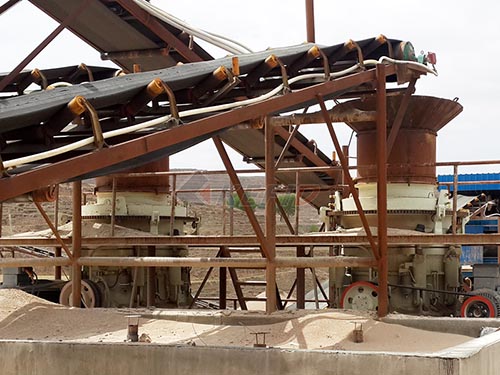
Secondary/Tertiary Crushers: Hydraulic Cone Crushers (multiple units).
Screening Units: Heavyduty vibrating screens (23 units), sizes from 2.4m x 6m to 3m x 8m.
Power Requirement: Total installed power typically ranges from 800kW to 1.2MW depending on configuration (e.g., inclusion of VSI).
Key Material Specifications: Main frame fabricated from S355JR steel; wear liners available in Mn18Cr2 or other highchrome alloys based on application.
Typical Plant Footprint: Approximately 80m (L) x 45m (W), subject to layout optimization.
Environmental Operating Range: Designed for ambient temperatures from 20°C to +45°C with optional heating/cooling packages for extreme climates.
6. APPLICATION SCENARIOS
Granite Quarry Expansion for Highway Project
Challenge: A regional quarry won a contract requiring consistent supply of three aggregate grades but faced bottlenecks in secondary crushing that limited output to ~220tph.
Solution: Implementation of a tailored crushing plant featuring two secondary cone crushers in parallel within the circuit.
Results: Achieved sustained throughput of 290tph while producing all three spec products simultaneously. Plant availability increased from ~82% to over 90%, enabling onschedule fulfillment of the project contract.
Limestone Processing for Cement Plant Feed
Challenge: An existing singleline limestone processing line could not meet increased kiln feed demand due to frequent blockages and high fines generation in the tertiary stage.
Solution: A new circuit was designed focusing on controlled reduction using a highpressure grinding roll (HPGR) module as part of the tertiary stage within the new plant layout.
Results: Fines generation (5mm) was reduced by over 15%, increasing the yield of valuable kiln feed fraction. Throughput stabilized at the design rate without blockages.
7. COMMERCIAL CONSIDERATIONS
A capital project like this requires clear commercial planning:
Pricing Tiers & Configuration Options
Base Configuration: Includes primary jaw crusher + single secondary cone + basic screening/conveying (~250tph). Entrylevel capital investment point.
HighCapacity Configuration: Primary gyratory + dual secondary cones + tertiary shaping stage (~300+tph). For maximum output flexibility.
SandFocused Configuration: Incorporates Vertical Shaft Impactor(s) for highyield manufactured sand production alongside chip aggregates.
Optional features include advanced dust collection systems (baghouses), automated lubrication systems, remote monitoring telematics packages, extended wear part warranties.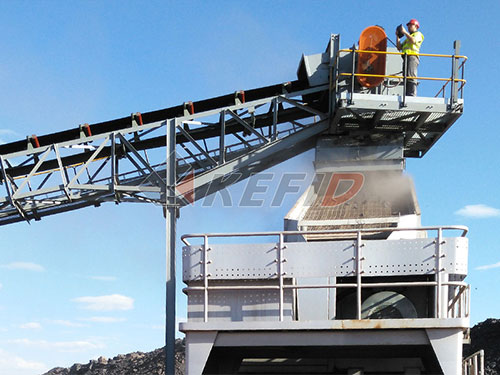
Service packages range from basic commissioning support through comprehensive multiyear maintenance agreements including scheduled inspections, parts kits, and priority technical support.
Financing options are typically available through partnerships with industrial finance institutions offering lease structures or equipment loans tailored to match projected cash flow from increased production.
8.FAQ
1.Q What are the key civil works required before installation?
A.A substantial reinforced concrete foundation is required for each major machine footprint—primary crusher (~400 m³), screen towers (~150 m³ each)—and loadbearing piers for conveyor galleries.Electrical substation capacity must meet peak demand (~1MW).
2.Q How does this type integrate with our existing primary extraction or downstream washing operations?
A.The entire system is designed around defined feed size from your blast profile.The discharge conveyors can be positionedto feed existing stockpiles,washing plants,and loadout systems.We engineer transfer points accordingly during design
3.Q What levelof operational crewis required?
A.A welldesigned automatedplantcanbe operatedbyone personfromthe controlroom,butrequiresat leasttwofieldoperatorsforinspectionandbasic mechanical tasks.Totalcrewsize dependsonsitespecificmaterial handling logistics
4.Q Canwearpartcostsbe predicted accurately?
A Yes.Basedonyour specificfeedmaterial analysis(abrasionindex silica content etc.) we provide validatedwear lifeestimatesformajorconsumableslike mantlelinersand blowbars allowingforaccuratecostperton forecasting
5.Q Whatisthetypical deliveryandinstallation timelinefromorder?
A Forastandardconfiguration leadtime formajorequipmentmanufactureis68months.Onsite erection commissioningandperformance testingtypicallyrequiresanadditional1014weekswithacertifiedcrew
6.Q Are sparepartsinventory recommendations provided?
A Yes.Uponfinaldesign weissueacriticalsparepartslist categorizedbyleadtime(immediateuse12month24month)tosupportyour maintenanceplanningandminimize riskofproductionstoppages
7.Q What trainingisprovidedfor ourmaintenance team?
A Comprehensive trainingisprovided coveringnormaloperation troubl eshooting proceduresandsafemaintenance practicesfor allemajorcomponents.Thisincludesbothclassroominstructionandhandson sessionsduringcommissioning