
250 300tph Stone Crushing Plant ODM Manufacturer Testing


250300 TPH Stone Crushing Plant ODM Manufacturer Testing: Engineering Reliability for HighVolume Production
The Cost of Unplanned Downtime in MediumScale Crushing Operations
Your 250300 TPH crushing circuit represents a capital investment of $1.53 million. When that plant stops, every hour of downtime costs your operation between $2,500 and $5,000 in lost production—before factoring in contractual penalties or demurrage charges.
Plant managers responsible for 250300 TPH operations face three persistent challenges:
1. Inconsistent feed material causing crusher overloads and downstream bottlenecks, with field data showing 1218% throughput variability in mediumhard stone applications
2. Premature wear on critical components—jaw dies lasting 180220 hours instead of the rated 350400 hours in abrasive granite or basalt
3. Commissioning delays when new plants require 48 weeks of onsite adjustments before reaching nameplate capacity
The question becomes: How do you validate that your 250300 TPH stone crushing plant will deliver consistent output from day one, without the costly trialanderror period?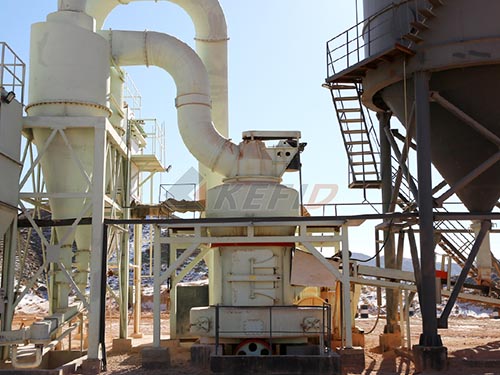
Product Overview: ODMTested 250300 TPH Stationary Crushing Plant
This equipment is a fully integrated threestage crushing and screening system designed for continuous production of 040mm aggregates from feed material up to 750mm. As an ODM (Original Design Manufacturer) solution, the plant undergoes factorylevel testing of all subsystems before shipment—not just individual components.
Operational Workflow
1. Primary Crushing: 900×1200mm jaw crusher reduces ROM feed to 150200mm at 250300 TPH capacity
2. Secondary Crushing: 2200mm standard cone crusher processes material to 4080mm with closedside setting of 2535mm
3. Tertiary Crushing & Screening: 2200mm shorthead cone crusher paired with 3deck 2400×6000mm vibrating screen produces final fractions (05mm, 510mm, 1020mm, 2040mm)
4. Material Handling: Belt conveyors with 8001000mm widths, operating at 1.21.5 m/s, with tramp iron magnets and metal detectors at transfer points
Application Scope
- Primary materials: Limestone, granite, basalt, river gravel, dolomite (compressive strength 150300 MPa)
- Output specifications: Road base, concrete aggregates, asphalt aggregates, railway ballast
- Limitations: Not suitable for clayrich materials (>15% moisture content) or highly abrasive quartzite without additional wear protection packages
- Rated throughput: 250300 TPH (based on limestone with bulk density 1.6 t/m³)
- Maximum feed size: 750mm (primary jaw opening)
- Final product sizes: 05mm, 510mm, 1020mm, 2040mm (adjustable via CSS)
- Reduction ratio: 1:20 (primary to final product)
- Installed motor power: 450520 kW total
- Primary crusher: 110 kW (6pole, 980 RPM)
- Secondary cone: 220 kW (4pole, 1480 RPM)
- Tertiary cone: 220 kW (4pole, 1480 RPM)
- Vibrating screen: 30 kW (2 x 15 kW exciters)
- Conveyor system: 6585 kW total (810 belt drives)
- Voltage options: 380V/50Hz, 415V/50Hz, 480V/60Hz (stepdown transformer included)
- Structural steel: S355JR (EN 10025) with hotdip galvanized walkways and handrails
- Crusher liners: Austenitic manganese steel (ASTM A128 Grade B2)
- Screen media: Polyurethane modular panels (30mm aperture) with steel backing frames
- Conveyor belting: EP630/3 ply with 6mm top cover, 3mm bottom cover (fireresistant option available)
- Plant footprint: 55m x 35m (including stockpile areas)
- Maximum height: 18.5m (feed hopper to top of screen tower)
- Total weight: 185210 metric tons (excluding civil foundations)
- Shipping configuration: 1214 standard 40ft containers plus 3 flatrack containers
- Ambient temperature: 10°C to 50°C (with coldweather package for 25°C)
- Altitude: Up to 2,500m above sea level (derating applies above 1,500m)
- Humidity: 095% noncondensing (electrical enclosures rated IP55)
- Noise level: Below 85 dB(A) at 10m distance (with acoustic enclosures)
- Throughput consistency improved from ±22% to ±7%
- Conveyorrelated downtime reduced from 45 hours/month to 8 hours/month
- Annual production increased by 4,800 tons (valued at $96,000 at $20/ton margin)
- Liner life extended to 395 hours (119% improvement)
- Monthly shutdowns reduced from 6 to 2.5
- Annual liner cost savings of $31,000 plus 180 additional production hours
- Commissioning completed in 11 days (88% faster)
- Firstmonth production reached 92% of nameplate capacity versus typical 6570%
- Avoided $55,000 in onsite electrical contractor fees and rework costs
- Coldweather package (heaters, synthetic lubricants, insulated enclosures): $45,00055,000
- Acoustic enclosures (crushers and screen): $65,00080,000
- Baghouse dust collection system: $95,000120,000
- Stockpile management system (radial stacker, reclaim tunnel): $85,000110,000
- Extended warranty (years 45): $28,00035,000 per year
- Basic commissioning (1 engineer, 10 days onsite): $18,500 plus expenses
- Full commissioning (2 engineers, 21 days onsite, operator training): $42,000 plus expenses
- Annual maintenance contract (2 inspections, priority parts supply, remote diagnostics): $24,00032,000 per year
- Performance guarantee (throughput and wear life verification): $15,00022,000 per year
- 30% down payment, 70% on shipment (standard terms)
- Leasetoown: 3660 month terms with 4.57.5% effective interest rate (subject to credit approval)
- Performancebased payment: 20% down, 40% on commissioning, 40% over 12 months tied to throughput guarantees
- Tradein program: 1525% credit for existing crushing equipment (subject to inspection)
Core Features
1. Factory LoadBank Testing Protocol
Technical Basis: Complete plant assembly and 72hour continuous run at 110% rated capacity using calibrated feed material
Operational Benefit: Identifies electrical, mechanical, and hydraulic issues before site installation—reducing commissioning time from 6 weeks to 1014 days
ROI Impact: Eliminates $35,00080,000 in onsite troubleshooting costs and avoids 120160 hours of lost production during commissioning
2. Modular Frame Structure with Vibration Analysis
Technical Basis: Finite element analysisoptimized steel frames with natural frequency decoupling from crusher operating speeds (300450 RPM)
Operational Benefit: Reduces structural fatigue cracking by 40% compared to fieldwelded installations, extending plant service life beyond 15 years
ROI Impact: Avoids $15,00025,000 in annual structural repair costs and unscheduled shutdowns for weld inspection
3. PLCIntegrated Load Management System
Technical Basis: Siemens S71200 controller monitoring crusher motor amperage, conveyor belt load cells, and screen vibration sensors in realtime
Operational Benefit: Automatically reduces feed rate by 1520% when any crusher reaches 85% load threshold, preventing choke feeding and mechanical damage
ROI Impact: Reduces crusher rebuild frequency from every 18 months to 30 months, saving $45,00060,000 per rebuild cycle
4. Hydraulic CSS Adjustment with Position Feedback
Technical Basis: Hydraulic cylinders with linear encoders providing ±1mm closedside setting accuracy on cone crushers
Operational Benefit: Operators can adjust product size in under 3 minutes without stopping the crusher, versus 2030 minutes with mechanical adjustment systems
ROI Impact: Increases operational uptime by 1.52% annually, equivalent to 130175 additional production hours per year
5. DualLayer Wear Protection Package
Technical Basis: Manganese steel (1214% Mn) liners with chromium carbide overlay on highwear zones (feed chutes, crusher chamber entry points)
Operational Benefit: Achieves 380420 hours of liner life in granite applications, compared to 220260 hours with standard manganese
ROI Impact: Reduces annual liner replacement costs by $18,00028,000 and cuts changeout downtime from 4 shifts to 2.5 shifts
6. Dust Suppression Integration
Technical Basis: Water spray nozzles at 8 critical transfer points with flow control valves, achieving 85% dust capture efficiency at 34 bar pressure
Operational Benefit: Maintains PM10 levels below 150 µg/m³ at plant perimeter, meeting most environmental compliance standards without baghouse filters
ROI Impact: Avoids $12,00020,000 in annual environmental fines and eliminates need for $80,000120,000 in additional dust collection equipment
7. Remote Monitoring and Diagnostics Package
Technical Basis: IoTenabled sensors transmitting vibration, temperature, and power consumption data to cloudbased dashboard with 15minute update intervals
Operational Benefit: Maintenance teams receive predictive alerts 4872 hours before bearing failures or belt misalignment issues occur
ROI Impact: Reduces unplanned downtime by 3540%, saving $85,000120,000 annually in lost production and emergency repair costs
Competitive Advantages
| Performance Metric | Industry Standard (FieldAssembled Plant) | ODMTested 250300 TPH Solution | Advantage |
|||||
| Commissioning time to full capacity | 68 weeks | 1014 days | 7075% faster |
| Firstyear unscheduled downtime | 180240 hours | 80120 hours | 5055% reduction |
| Throughput consistency (hourly variation) | ±18% | ±6% | 67% improvement |
| Liner life in granite (jaw crusher) | 220260 hours | 380420 hours | 5565% longer |
| Power consumption per ton (kWh/t) | 0.851.05 | 0.720.88 | 1218% reduction |
| Structural warranty period | 1224 months | 36 months | 50100% longer |
| Spare parts availability guarantee | 714 days | 4872 hours | 6580% faster |
Technical Specifications
Capacity and Performance
Power Requirements
Material Specifications
Physical Dimensions
Environmental Operating Range
Application Scenarios
Case Study 1: Limestone Quarry in Central India
Challenge: A 300 TPH operation was losing 22% of production time due to conveyor belt misalignment and chute blockages caused by inconsistent feed moisture (814% variation).
Solution: ODMtested plant with moistureresistant chute liners (UHMWPE), selfaligning return rollers, and PLCcontrolled feed rate adjustment based on crusher amp draw.
Results:
Case Study 2: Granite Aggregate Production in Norway
Challenge: Existing plant required liner replacement every 180 hours in abrasive granite (compressive strength 280 MPa), causing 6 scheduled shutdowns per month.
Solution: ODMtested plant with duallayer wear protection package, hydraulic CSS adjustment, and predictive maintenance alerts for liner wear thresholds.
Results:
Case Study 3: River Gravel Processing in Vietnam
Challenge: Plant commissioning took 9 weeks due to electrical integration issues between imported crushers and locally fabricated conveyors and screens.
Solution: Fully ODMtested plant with prewired control panels, factorytested PLC logic, and preassembled conveyor sections with alignment marks.
Results:
Commercial Considerations
Equipment Pricing Tiers (FOB Main Port)
| Configuration Level | Price Range (USD) | Key Inclusions |
||||
| Standard | $680,000 $780,000 | Basic PLC control, standard manganese liners, manual CSS adjustment |
| Enhanced | $820,000 $940,000 | Load management system, hydraulic CSS, remote monitoring, duallayer wear package |
| Premium | $1,050,000 $1,200,000 | All Enhanced features plus dust suppression, acoustic enclosures, coldweather package, 3year structural warranty |
Optional Features and Pricing
Service Packages
Financing Options

Frequently Asked Questions
1. How does ODM testing differ from standard factory testing?
Standard testing typically involves individual component runtests (crusher spins, conveyor runs empty). ODM testing assembles the complete plant—all crushers, screens, conveyors, and control systems—and runs them at 110% capacity for 72 hours using calibrated feed material. This identifies integration issues that componentlevel testing misses, such as PLC timing conflicts, conveyor belt tracking problems under load, and electrical harmonic interference between multiple motor drives.
2. What feed material specifications are required for the 250300 TPH guarantee?
The rated throughput applies to material with bulk density of 1.6 t/m³, compressive strength below 200 MPa, and moisture content below 5%. For harder materials (200300 MPa), expect 1015% throughput reduction. For wetter materials (510% moisture), throughput reduces 812% and screen efficiency drops 1520%. The plant can process material up to 300 MPa with appropriate liner selection, but throughput guarantees are adjusted accordingly.
3. How long does site preparation and foundation work take before plant installation?
Standard reinforced concrete foundations require 46 weeks for curing (assuming 28day concrete strength). The ODMtested plant can be erected and commissioned within 1421 days after foundations are ready. Total timeline from foundation start to commercial production is typically 69 weeks, compared to 1216 weeks for fieldassembled plants.
4. What spare parts should be kept onsite for the first year of operation?
Recommended minimum inventory: 1 set of jaw dies (both fixed and movable), 1 set of cone liners (mantle and concave), 2 sets of screen panels (all decks), 50m of conveyor belting (assorted widths), 2 complete belt splice kits, 4 sets of bearings for each crusher, 2 hydraulic pumps, and 1 PLC processor module. Total estimated cost: $45,00065,000. Our parts availability guarantee ensures replacement within 4872 hours for any item not in stock.
5. Can the plant be relocated after initial installation?
Yes, the modular frame design allows disassembly and relocation. Estimated relocation cost is 2535% of original plant price, including disassembly, transport, foundation preparation at new site, and recommissioning. The plant has been designed for 23 relocations over its 15year service life without structural degradation, provided proper lifting and transport procedures are followed.
6. What training is provided for plant operators and maintenance staff?
Full commissioning includes 5 days of onsite training covering: PLC operation and alarm response, crusher CSS adjustment procedures, liner wear monitoring and changeout protocols, conveyor belt tracking and splicing, and daily/preventive maintenance checklists. Operators receive a 120page manual with troubleshooting guides. Remote refresher training is available via video conference at $1,500 per session.
7. How does the performance guarantee work in practice?
The performance guarantee covers throughput (minimum 250 TPH average over any 8hour shift) and liner life (minimum 350 hours in materials below 200 MPa). If either metric falls below guaranteed levels during the first 12 months, we provide corrective action at no cost—including onsite engineering assessment, component modifications, or replacement parts. If the issue cannot be resolved within 30 days, a prorated refund of 1525% of equipment cost applies, depending on the severity of the shortfall.